0121 384 3244
Book Online
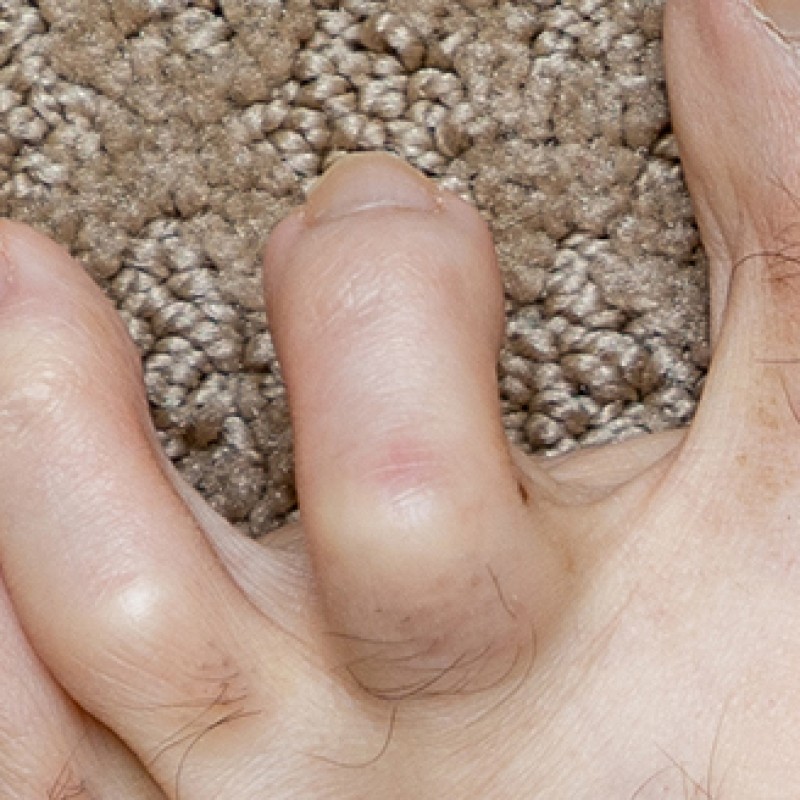
A claw toe will often sit higher than your other toes, and it's 'claw' shape will be easily distinguishable.
Claw toes are classified based on the mobility of the toe joints. There are two types – flexible and rigid. In a flexible claw toe, the joint has the ability to move. This type of claw toe can be straightened manually.
A rigid claw toe does not move. Movement is very limited and can be extremely painful. This sometimes causes foot movement to become restricted, leading to extra stress at the ball of the foot and possibly causing pain and the development of corns and calluses.
Claw toes result from a muscle imbalance, which causes the ligaments and tendons to become unnaturally tight. This results in the joints curling downwards. Arthritis can also lead to many different forefoot deformities, including claw toes. Claw toes are most common in feet with bunions and in high-arched feet.
Seeking advice from a podiatrist is helpful. Your podiatrist can advise on appropriate footwear and identify whether conservative treatment is adequate or if a surgical referral is necessary.
Wearing footwear that causes the awkwardly lying toe to be subjected to even greater pressure is not advisable. A deep toe box and wide fitting shoe are essential to maintain comfort when suffering from a claw toe.
The affected toe often does not have an aesthetically pleasing appearance. Surgery may eventually be required to correct and straighten a claw toe where conservative treatment is insufficient.
X-rays may be necessary to rule out arthritis; a steroid injection may help with some degenerative changes within the joint.
Splints made of rubber or silicone may help control mild cases. Any pain from corns and calluses may be eased by having your podiatrist remove these with a scalpel blade. Choosing shoes of a more generous fit or with uppers made from soft materials is advisable. To help reduce some of the painful symptoms of claw toe, your podiatrist can provide a protective pad to be worn over the area.
Call on 0121 384 3244 Book An Appointment