0121 384 3244
Book Online
A fracture is a break in the bone. Fractures can be divided into two categories: traumatic fractures and stress fractures.
Traumatic fractures (also called acute fractures) are caused by a direct blow or impact like seriously stubbing your toe. Traumatic fractures can be displaced or non displaced. If the fracture is displaced, the bone is broken in such a way that it has changed in position (dislocated). Treatment of a traumatic fracture depends on the location and extent of the break and whether it is displaced. Surgery is sometimes required. Signs and symptoms of a traumatic fracture include:
Evaluation by a podiatrist is recommended, as we will be able to fully diagnose the cause of your pain and suggest the best course for treatment.
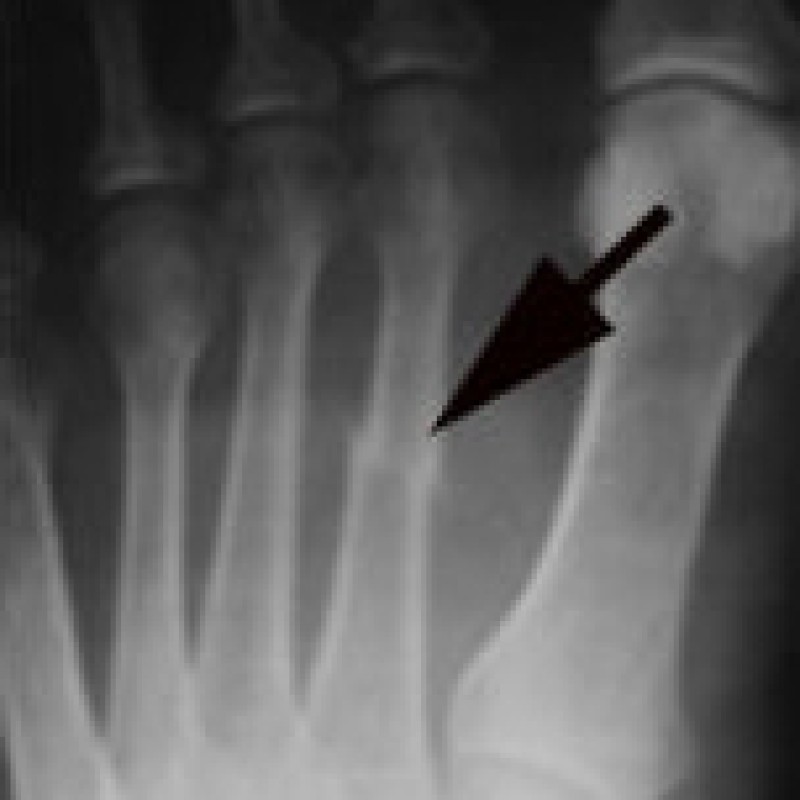
Stress fractures are tiny; hairline breaks that are usually caused by repetitive stress. Stress fractures are often seen in athletes who, for example, too rapidly increase their running mileage. Or they may be caused by an abnormal foot structure, deformities, or osteoporosis.
Improper footwear may also lead to stress fractures. Stress fractures should not be ignored because they will return, often worse than before, if they're not properly treated. Symptoms of stress fractures include:
Sprains and fractures have similar symptoms, although sometimes, the whole area hurts rather than just one point with a sprain. Your podiatrist at the Footfix clinic will be able to properly diagnose the issue and provide appropriate treatment. Certain sprains or dislocations can be severely disabling. Without proper treatment, they can lead to crippling arthritis.
Some people say that “the doctor can’t do anything for a broken bone in the foot.” This is simply not true. In fact, if a fractured toe or metatarsal bone is not treated correctly, serious complications may develop.
For example:
Fractures of the toe bones are almost always traumatic fractures. Treatment for traumatic fractures depends on the break itself and may include these options:
Rest - Sometimes, rest is all that is needed to treat a traumatic fracture of the toe.
Splinting - The toe may be fitted with a splint to keep it in a fixed position.
Rigid or Stiff-Soled Shoe: Wearing a stiff-soled shoe protects the toe and helps keep it properly positioned.
Buddy Taping - Buddy taping the fractured toe to another toe is sometimes appropriate, but it may be harmful in other cases.
Surgery - If the break is badly displaced or if the joint is affected, surgery may be necessary. Surgery often involves the use of fixation devices, such as pins.
Breaks in the metatarsal bones may be either stress or traumatic fractures. Certain kinds of fractures of the metatarsal bones present unique challenges.
For example, a fracture of the first metatarsal bone (behind the big toe) can lead to arthritis. Since the big toe is used so frequently and bears more weight than other toes, arthritis in that area can make it painful to walk, bend, or even stand.
Another type of break, called a Jones Fracture, occurs at the base of the fifth metatarsal bone (behind the little toe). It can often be misdiagnosed as an ankle sprain, and misdiagnosis can have serious consequences since sprains and fractures require different treatments. Your podiatrist is an expert in correctly identifying these conditions as well as other problems of the foot.
Treatment of Metatarsal fractures depends on the type and extent of the fracture and may include:
Rest - Again, sometimes rest is the only treatment needed to promote healing of a stress or traumatic fracture of a metatarsal bone.
Avoid the Heavy Activity - Stress fractures are often a result of repetitive stress; it is essential to avoid the activity that led to the fracture. Crutches or a wheelchair are sometimes required to offload weight from the foot to give it time to heal.
Immobilisation, Casting, or A Rigid Shoe - A stiff-soled shoe or another form of immobilisation may be used to protect the fractured bone while it is healing.
Surgery - Some traumatic fractures of the metatarsal bones require surgery, especially if the break is badly displaced. If this is the case, you will need to see a foot and ankle surgeon.
Follow-Up Care - Your podiatrist can provide instructions for care following surgical or non-surgical treatment. Physical therapy, exercises and rehabilitation may be included in a schedule for return to normal activities.
Call on 0121 384 3244 Book An Appointment