0121 384 3244
Book Online
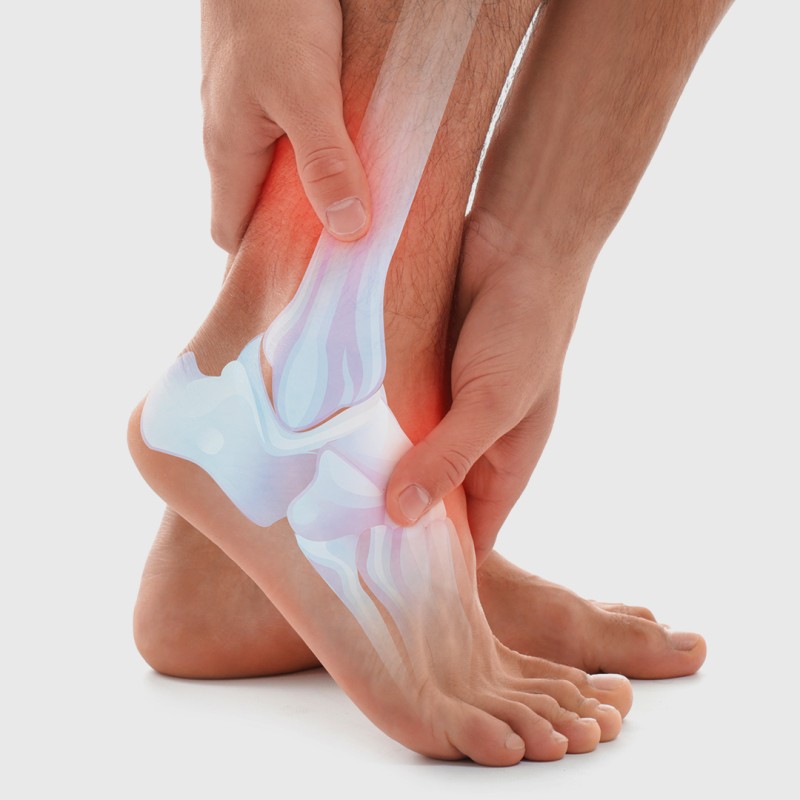
Pain is the main problem with arthritis of any joint. The pain usually begins when undertaking certain activities; often, when starting the activity, you will not notice any pain; however, after resting for several minutes, the pain and stiffness could increase. Later, pain may be present even at rest when the condition worsens.
The pain may interfere with sleep. The joint may swell, fill with fluid, and feel tight, especially following increased activity. As the articular cartilage starts to wear off the joint surface, the joint may squeak when moved.
Osteoarthritis will eventually affect the motion of a joint. The joint becomes stiff and loses flexibility. Certain movements can become painful, and it may become difficult to trust the joint to hold your weight in certain positions.
The body has a pain reflex such that when a joint is put into a position that causes pain, the muscles around the joint may stop working without warning. This reflex can cause a person suffering from Osteoarthritis to be much more likely to stumble and fall over.
When Osteoarthritis has reached a very severe stage, the bone itself under the articular cartilage may become worn away. This can lead to increasing deformities around the joint. In the final stages, the alignment of the bones can begin to form odd angles where they meet at the joint.
Injury to a joint, such as a bad sprain or fracture, can cause damage to the cartilage; this can be traumatic in nature or from abnormal biomechanics of your ankle and foot function.
The cartilage can be bruised when too much pressure is exerted on it. This damages the cartilage, although if you look at the surface, it may not appear to be any different. The injury to the material doesn't show up until months later.
Sometimes the cartilage surface is damaged even more severely, and pieces of the cartilage are ripped from the bone. These pieces do not heal back and usually must be removed from the joint surgically. If not, they may float around in the joint, causing the joint to catch and become painful. These fragments of cartilage may also do more damage to the joint surface.
Once this cartilage is ripped away, it does not normally grow back. Unlike bone, holes in the surface are not simply replaced by the cartilage tissue around the hole. Instead, the defects are filled with scar tissue.
The scar tissue that forms is not nearly as good a material for covering joint surfaces as the cartilage it replaces. It just can't support weight and isn't smooth like actual articular cartilage.
When an injury results in a change in the way the joint moves, the injury may increase the forces on the articular cartilage. This is similar to any mechanical device or machinery. If the mechanism is out of balance, it wears out faster.
Over many years this imbalance in the joint mechanics can damage the articular surface. Since cartilage cannot heal itself very well, the damage adds up. Finally, the joint can no longer compensate for the increasing damage, and it begins to hurt. The damage occurs well before the pain begins.
In summary, arthritis may come from differences in how we are put together based on our genes.
Or arthritis may develop years after an injury that leads to slow damage to the joint surface. Either way, the joint is worn out, and it will become painful.
The earlier that treatment is sought, the more likely we can help to prevent/slow down the degenerative process.
Following a detailed history, the podiatrists at Footfix clinic will examine the joint and other joints in your feet and legs. It will be essential for us to see how the motion of the joint has been affected.
The alignment of the joint will be assessed. The nerves and circulation going to the legs and ankle will be checked.
Your podiatrist will watch you walk to see if you have a noticeable limp or deformity.
Our podiatrists may also do some weight-bearing X-rays to aid in obtaining an accurate diagnosis prior to the start of your podiatry treatment.
The treatment of Osteoarthritis of the ankle can be divided into the nonsurgical and the surgical.
Surgery is usually not considered until it has become impossible to control the symptoms without it.
Non-Surgical Treatment
Rehabilitation services, such as those offered at Footfix play an essential role in the treatment plan for ankle joint arthritis.
Treatment usually begins when the ankle first becomes painful. The pain may only occur at first with heavy use and may simply require the use of mild anti-inflammatory medications such as ibuprofen or alternative homoeopathic medicine; we also recommend our patients start a course of chondroitin and glucosamine.
Reducing the activity or changing from occupations requiring long-standing and walking periods may be necessary to help control the symptoms. Using Biofreeze can help to control symptoms as well.
The main goal of your podiatry treatment is to help you learn how to control symptoms and maximise the potential of your joint(s).
Our podiatrists will instruct you on techniques you can use to calm your pain and symptoms. We may advise you to use rest, heat, or topical rubs. Our podiatrist will work with you to improve your legs and feet' flexibility, balance, and strength.
Braces that reduce the motion in the ankle can also be beneficial in reducing pain. These help to control inversion injuries of the ankle.
Orthotics are special customised bespoke inserts that control the foot and ankle motion as well as aid in providing arch support and comfort in your shoes. We find that most ankle pain sufferers get relief of symptoms by wearing these.
We may also recommend modifying your shoe to give some relief of symptoms. The rocker sole replaces your regular sole with a rounded one, allowing your foot to roll as you move through a step. This can help take the stress off the ankle as you walk.
Injection Therapy
A cortisone injection into the joint can temporarily relieve symptoms of Osteoarthritis.
There are also new injectable medications that lubricate the arthritic joint. These medications have been studied mainly in the knee. These injectable medications are trying to replace synovial fluid, which may have been lost from the joint space.
Surgery
Eventually, it may be necessary to consider surgery for Osteoarthritis of the ankle. Several different types of surgery can be performed to help with your condition. Many things will determine which procedure your surgeon recommends.
If you need a surgical referral, we can refer you to our Foot and Ankle Surgeon for a private consultation.
Call on 0121 384 3244 Book An Appointment