
0121 384 3244
Book Online
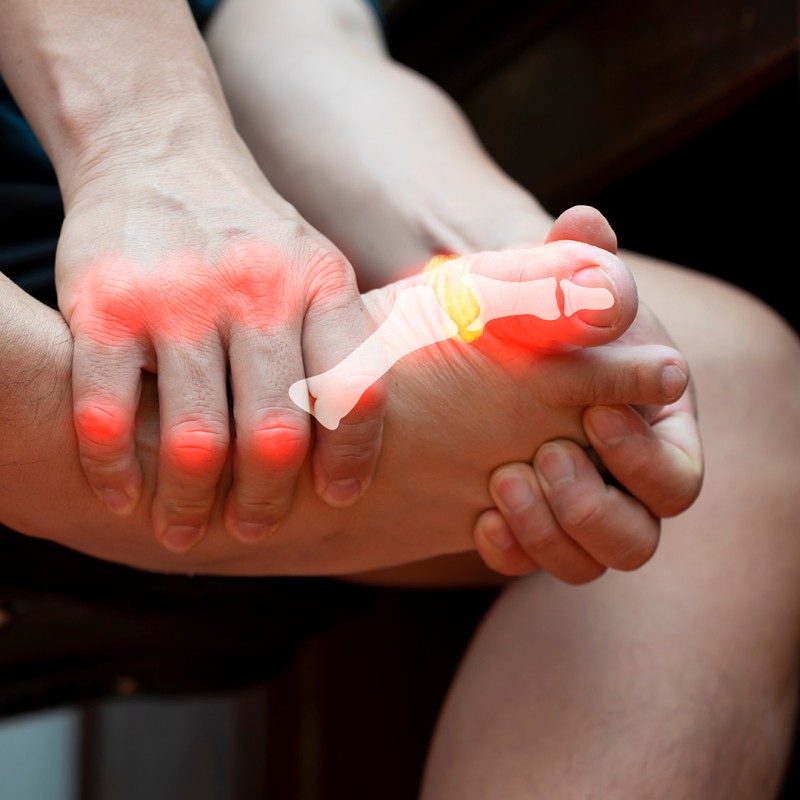
Gout is a form of inflammatory arthritis that occurs due to the build-up of uric acid in the body and the joint fluid (hyperuricemia) and can be very painful. This accumulation of uric acid typically occurs when the body has difficulty processing certain protein substances called purines (preens) that are found naturally in our diets. The actual build-up of uric acid can result when the body has difficulty eliminating uric acid through the kidneys and urine or when the body produces too much uric acid. The tendency to accumulate uric acid is often hereditary.
Gout usually starts with a sudden onset of intense pain in one or more of the joints in your foot, most commonly, however, on the foot's big toe joint. The pain is accompanied by redness, swelling and warmth over the joint. Typically, the patient does not recall injuring the joint before the pain started. Many patients say they first noticed pain in the middle of the night or upon arising in the morning.
While symptoms most commonly occur in the big toe joint, any joint may be involved. Other common sites are the instep of the foot, the ankle, or the knee. When the foot is affected, wearing shoes is difficult and painful as are attempts to move the joint or stand on the foot.
The diagnosis is based on a personal and family history, as well as on the examination, which often finds the classic signs of gout and makes the diagnosis clear. Blood tests are also often performed to determine uric acid levels, and the joint fluid is examined to look for signs of uric acid crystals. X-rays also may be performed to examine both the bones and joints to rule out abnormal changes associated with gout.
The treatment of gout starts with establishing the correct diagnosis. Oral anti-inflammatory medications are most often used to manage acute attacks.
While over the counter drugs may reduce symptoms, they are rarely strong enough to treat the acute pain, swelling and inflammation. An injection of corticosteroid may help reduce the inflamed toe.
If the gout attack is in the toe, it will typically help to elevate the foot, avoid standing and walking, and wear only a loose slipper until the individual can be seen by one of our podiatrists at the Footfix clinic.
Whether the appearance of gout is a sudden attack or a long term issue, it can usually be controlled with proper medication and a fast diagnosis. Your G.P. must establish which of the two primary causes (producing too much uric acid or not eliminating it correctly) is involved in order to begin treating the gout with the appropriate medication.
If gout attacks continue despite medical treatment, if there are excessive deposits of gouty crystals within a joint, or if arthritis causes continual discomfort, surgical treatment may be necessary to remove the crystals (tophi) and repair the joint.
You should try to avoid eating certain foods if you suffer from gout, this includes foods that are high in purines because they can increase uric acid levels and thus bring on an acute attack of gout. These foods include red meats, shellfish, beer, red wine and salt. Some medications, such as diuretics (water pills) that are often used to control high blood pressure or reduce swelling, also may cause an acute attack of gout. Stress, infection and trauma also are possible causes.
Drinking 6-8 glasses of water each day, eating an appropriate diet and evaluating current medications will reduce the likelihood of an attack or lessen the severity should it occur.
If you have a personal or family history of gout, regular examinations by the Footfix clinic Podiatrists will also help to identify the potential for an attack of gout before it happens. Contact us today to book an appointment.
Call on 0121 384 3244 Book An Appointment