
0121 384 3244
Book Online
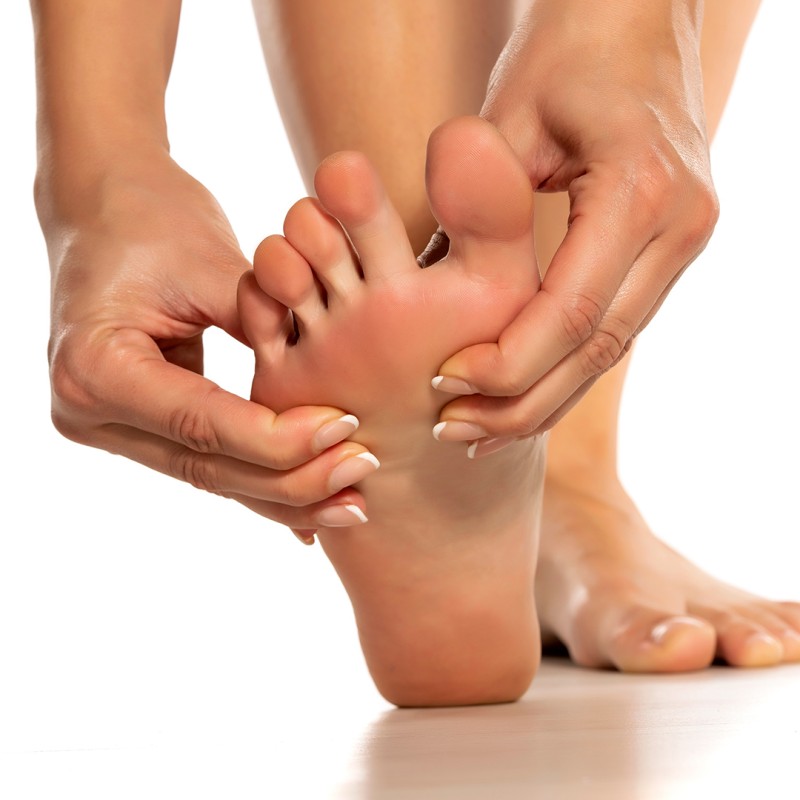
Metatarsalgia is a common overuse injury described as pain in the front part of the foot (the forefoot). It is associated with increased stress over the heads of your metatarsal bones (the ball of your foot). There are five metatarsal bones in the foot; these bones are similar to the "knuckles" on the hand. Each metatarsal serves to distribute the body's entire weight across the forefoot. The forefoot is anatomically composed of bones, ligaments, tendons, muscles, nerves, blood vessels and skin, which all interrelate. These components alone may cause a painful condition or in combination at the junction known as the metatarsal-phalangeal joint. Metatarsalgia commonly occurs in the area where the second, third and fourth toes meet the ball of the foot (the metatarsal heads).
Metatarsalgia causes pain in the ball of your foot that can be worsened by walking or running. There may be a burning or aching sensation in the ball of the foot, and some people compare it to the sensation of ‘walking on pebbles. The intensity of the pain varies greatly from mild to severe. Shooting pains in the toes, tingling or numbness around the toes, and worsening pain when standing or moving are all common symptoms of metatarsalgia. Symptoms usually develop gradually over a period of months rather than coming on suddenly.
Metatarsalgia can be caused by a number of different conditions. Some of the most common causes are:
Overuse -
For example, in runners and athletes, which can cause some mild inflammation in the metatarsal heads and nearby joints. Other sports such as tennis or sports that involve jumping like basketball or gymnastics may also put extra stress on the metatarsal heads and lead to inflammation and pain.
Wearing high-heeled shows -
This can put extra stress on the metatarsal heads. Footwear that is poorly fitted or too tight may also be the cause.
Being overweight -
Excess weight can put extra stress on the feet in general.
Callouses -
This is a build-up of hard skin which may be diffuse and spread over a broad area or be very localised and deep-rooted. Callouses may be due to a structural cause, such as an enlarged metatarsal head, long metatarsal or degenerative change such as rheumatoid arthritis. Operational reasons may be due to the incorrect way you walk, flat feet, and the loss of fatty padding on the foot.
Having a stiff ankle or Achilles Tendon (the tendon at the heel) -
This can affect how pressure is distributed across the foot and may lead to extra stress on the metatarsal heads.
Morton's neuroma -
This is sometimes called Morton's metatarsalgia. It is a condition that affects one of the nerves that run between the metatarsal bones in the foot (the plantar digital nerves). Symptoms include pain, burning, numbness and tingling between two of the toes of the foot.
Pes cavus -
This is also known as clawfoot. Your foot has a very high arch in the pes cavus, which does not flatten when you put weight on your foot. It happens because of an imbalance in the muscles of the foot. It can run in families. Sometimes pes cavus can happen out of the blue, but most people with pes cavus also have neurological problems such as cerebral palsy, spina bifida, muscular dystrophy or polio. Pes cavus can mean that extra stress is placed on the ball of the foot, which can lead to metatarsalgia.
Hammertoe or Claw toe deformity -
With a claw toe, you have an abnormal position of all three of the joints in the toe. The joint with the metatarsal bone is bent upwards, the middle joint in the toe is bent downwards, and the end joint in the toe may also be bent downwards. The toe resembles a claw. With a hammertoe, your toe is permanently bent at its middle joint so that it looks like a hammer.
Several conditions can cause these toe deformities. These can include poorly fitted shoes, injury to the toes, bunions and rheumatoid arthritis. Hammer and claw toe can also occur in someone with pes cavus. They can also run in families. These toe deformities can mean that extra stress is placed on the ball of the foot, which can lead to metatarsalgia.
Bunions (Hallux Valgus) -
A bunion is a deformity of the base joint of the big toe, causing the big toe to be angled towards the second toe. This causes a bump on the side of the foot at the base of the big toe. There is often thickening of the skin and tissues next to the affected joint. The thickened skin and tissues may become inflamed, swollen and painful. Because of the bunion, extra stress is put on the ball of the foot, and this can lead to metatarsalgia.
Previous surgery to the foot -
For example, previous surgery for bunions.
Stress fracture of a metatarsal -
A stress fracture is a type of incomplete fracture in a bone. Stress fractures tend to occur due to overuse and are known as overuse injuries. A metatarsal stress fracture is a stress fracture in one of the metatarsal bones in the foot.
Arthritis or gout -
This can cause inflammation of the joints in the ball of the foot or of the big toe and can cause metatarsalgia.
Diabetes -
This can cause damage to the nerves in the feet and can be a cause of metatarsalgia.
If you suspect that you have metatarsalgia, you should have an assessment from one of our qualified podiatrists here at the Footfix clinic.
Depending on how quickly symptoms have appeared, we will determine the appropriate treatment. Reducing levels of pressure over the area is key and often, avoiding certain types of activity for some time is necessary. We may do x-rays to check the bone structure in your foot. For insoles to try yourself, go to our shop.
Wearing inappropriate footwear and continuing with high-impact sports will worsen symptoms. Avoiding the activity that places high pressure on the forefoot is very important.
Continued high pressure on the forefoot may lead to stress fractures of the metatarsals.
Orthotics and insoles can be provided to improve the foot's function and redistribute pressure to protect the ball of the foot. Cushioning silicone gel insoles may also provide relief. Advice regarding appropriate footwear with good shock absorption is essential.
Injection therapy with cortisone or homoeopathic preparation may also be indicated. Radial Shock Wave Therapy may be applied; also, ultrasound treatment with strapping is a promising treatment modality.
Call on 0121 384 3244 Book An Appointment